What is the new IAS MIPI sensor interface?


One of the biggest challenges for engineers looking to add embedded vision or image sensors to a design is the diversity in camera and sensor hardware interfaces, which is enough to make your head explode. A standard like the MIPI Camera Serial Interface 2 (CSI-2), a high-speed protocol that defines the interface between the image sensors, ISP and a host processor, is widely used today for high-speed communications output from image sensors in most embedded systems. Its popularity is due to the simple fact that it vastly reduces the complexity of integration for developers.
But existing standards like this describe only the electrical interface—namely point-to-point image and video or image transmission between cameras and host devices and a software protocol. Up until now, none have addressed the physical connection, defining such pesky but necessary details like which signal will reside on which pin.
A new sensor standard that addresses both electrical and physical interfaces
The new, standardized IAS (Imager Access System) MIPI sensor interface, developed by onsemi, is designed to address that gap. It does that by building upon the industry momentum that is already behind the MIPI standard, but it goes a step beyond with the addition of a standardized physical interface. The IAS standard references a freely available 34-pin connector and a defined set of pins and electrical signals, providing developers with an easy means of connecting the camera module to any reference board, development platform, or even a production system. In short, it allows an engineer to gain easy access to any image sensor module that is compatible within the IAS standard.
An obvious benefit is that it eliminates the need for an adaptor board, freeing up engineers to focus on the more valuable aspects of the product design. The standard also:
- Simplifies design-in: It eliminates the need to source lenses or explore module vendors
- Reduces time to market with its inherent low-touch design
- Provides a plug-and-play solution, which means imaging system expertise is not required
In partnership with onsemi and Rayprus, a supplier of chip-on-board camera modules, Avnet has developed a portfolio of IAS camera modules, adapters, and reference designs to help embedded vision developers. The system-level approach allows developers to easily prototype and experiment with different IAS camera modules on a number of different MCU, MPU, and SoC based platforms from NXP, Renesas, and AMD-Xilinx.
Each IAS camera module combines the image sensor with the appropriate lens system, housing, flex cable and IAS connector. These IAS camera modules are available from Avnet in single piece quantity for development, high volume for production, or can be customized with lens and cable options that meet your specific needs.
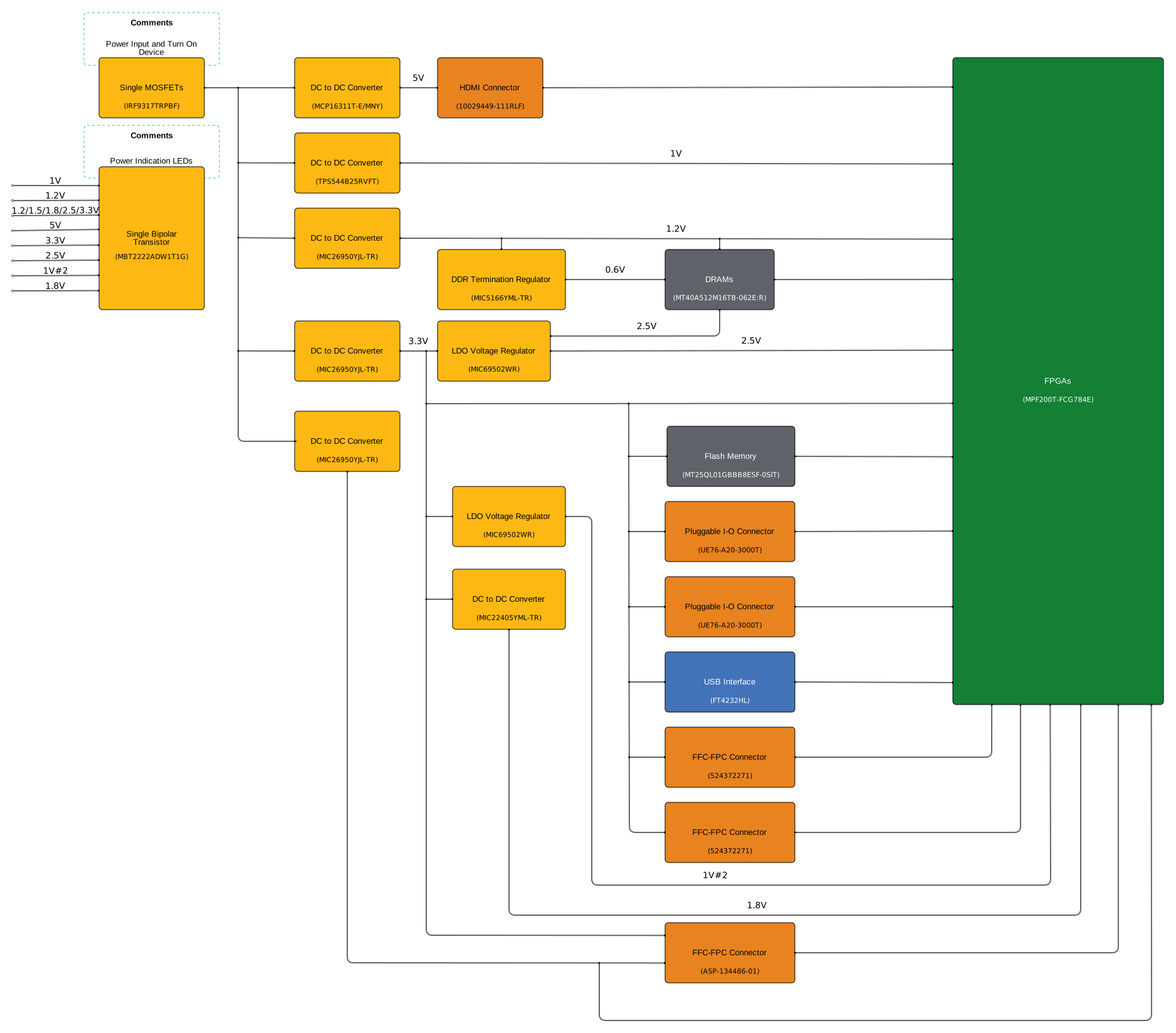
Avnet has also created several IAS adapter modules that enable single or dual IAS camera modules to be added to various processing platforms such as Avnet’s Ultra96 Zynq Ultrascale+ SBC and the Avnet i.MX 8M Plus based Edge AI kit.
As more and more engineers add vision capabilities to their product designs, this portfolio of products and resources will help them jumpstart their applications.
For more information about Avnet’s IAS camera modules adapters, and reference designs and other boards click below.