The move to 48 volts in transportation


Key Takeaways:
- 48V systems are being adopted in mobility, industrial, data centers, and automotive
- Higher voltage brings multiple benefits
- New 48V motor control kit offers flexibility and efficiency
- Battery management included
Shifting to 48V isn’t just about higher voltage. What stands out here is how that shift enables lighter designs, longer battery life, and more efficient operation. Think drones that fly further, autonomous robots that run longer without a recharge, and electric vehicles that pack more punch without bulking up.
For OEMs looking at a new product line or planning upgrades, that’s more than a technical specification; it’s a competitive factor. Getting ahead of this voltage transition could mean catching the next wave in smart transportation and industrial automation.
The market’s responding, not just in automotive, but across sectors like logistics, warehousing, and even consumer robotics.
Put 48V on your roadmap
For teams evaluating roadmap priorities, the takeaway is that aligning with this voltage shift isn’t optional. It’s quickly becoming a baseline expectation for future-ready platforms.
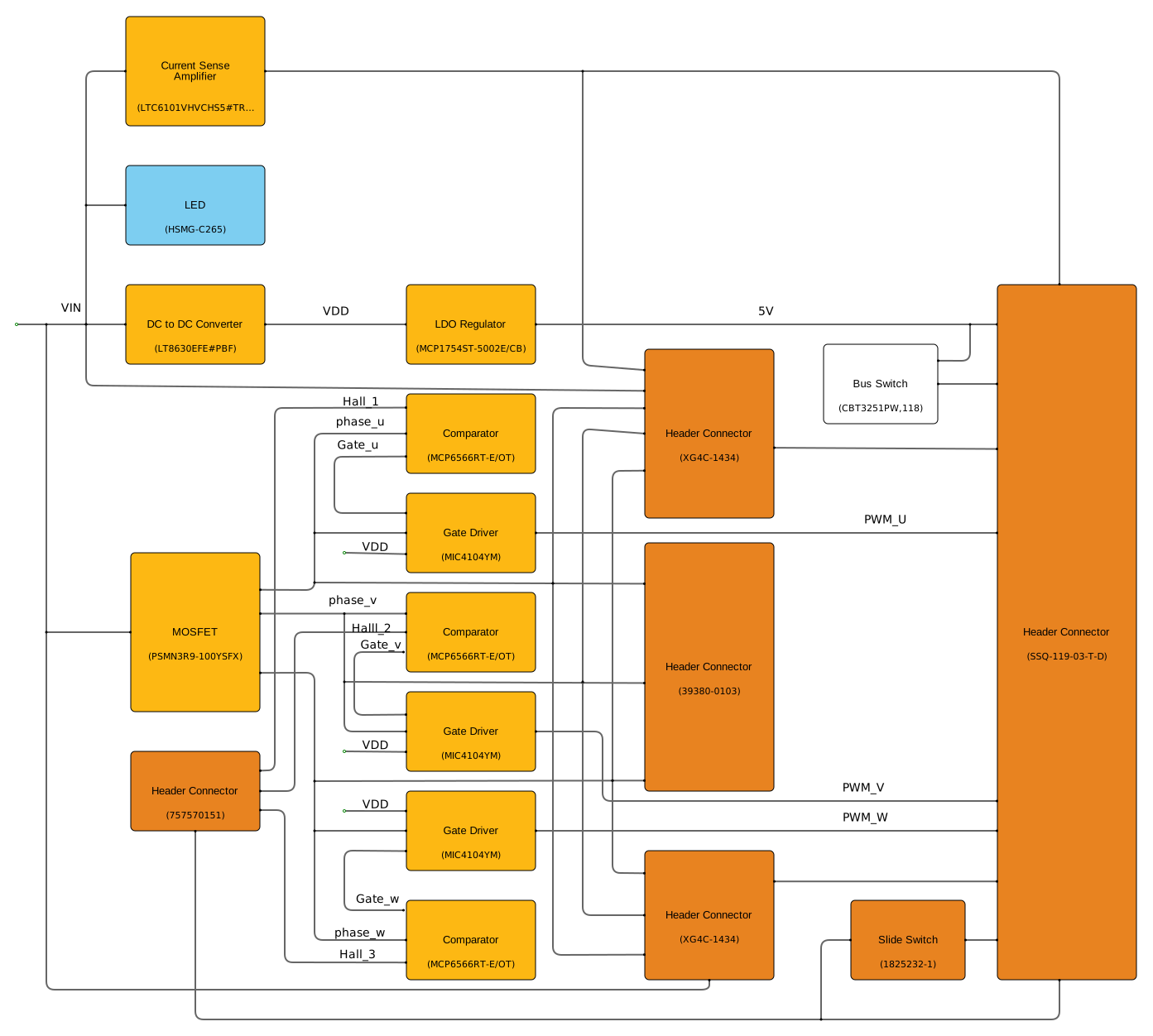
NXP has introduced a high-power 48V motor control kit, and there’s quite a bit under the hood here. You’ve got flexibility for controlling single three-phase, dual three-phase, single six-phase setups, plus compatibility with resolver, hall, and encoder sensors. That means it’s well positioned for teams with complex motor demands. Those motors could be driving a range of applications, from drones to autonomous or guided robots.
From a strategic standpoint, having isolated communication and redundant power supply isn’t just a feature, it’s risk mitigation. Fault protection for things like overcurrent and overheating? That’s a game-changer for operational uptime. Add functional safety to the mix. It’s built for both industrial and automotive standards, so teams don’t have to choose between performance and compliance.
Development kit availability
Launch timing is crucial. NXP’s development kit is available from December for early access, but the full rollout lands in January. Contact your Avnet representative to register your interest. NXP is also bundling standard drivers and control libraries, so the barrier to entry is lower for engineering teams.
For OEMs that need deeper customization, there’s a premium software tier with extra safety features and source code. The architecture is modular, too: controller board, adapter board, power stage, and heat sink, with motors left out for flexibility. That setup is deliberate, letting customers tailor the kit to their own requirements, rather than locking them into a one-size-fits-all hardware solution.
NXP is working with Avnet to enable faster adoption of 48V solutions

The NXP development kit will be generally available from January 2026, with early access available by contacting your Avnet representative.
NXP MCUs are at the core, plus a GUI for streamlined control. It’s aimed at making deployment straightforward, whether for prototyping or scaling up production. That level of integration should make it easier for teams to hit aggressive timelines while still meeting compliance and quality bars.
Battery management for 48V systems
Let’s shift the focus to battery management. If you’re investing in next-gen mobility or industrial systems, BMS is at the heart of every decision. What’s new here is the scale. The product family now covers everything from 12 volts all the way up to 1500 volts, but the 48V range is the sweet spot for cost and flexibility. That’s not just for cars; it’s a fit for industrial energy storage, drones, and autonomous robots.
That creates a broader footprint, but what’s the real differentiator between these 48V solutions and the legacy setups? First, you’re seeing devices like the BMA 7518 that are exclusive to 48V, with others bridging up to higher voltages in industrial use. Certification’s a key lever. Everything’s aiming for ISO 26262 on the automotive side and IEC 61508 for industrial. Compliance isn’t just a checkbox; it moves the needle on market access and risk.
There’s a new software stack for active cell balancing, and “battery passport” tools are being rolled out to keep up with European compliance. Secure protocols are another layer, making sure the system’s ready for upcoming requirements. NXP is not just filling out the product line, it’s building for future-proofing and regulatory headwinds.
Early access to 48V solutions
Avnet is working with NXP to provide early access for select customers. If you’re aiming to build momentum before January, this is a real lever for market entry. By prioritizing hands-on pilots and direct feedback loops, teams catch issues or feature requests early in the cycle.
If you are evaluating 48V systems, contact your Avnet representative to find out how you could benefit from these exciting developments.
Visit the Automotive and Transportation page to see how Avnet can help accelerate your next product development cycle.