
Leading-edge technology for power distribution in 12 V applications

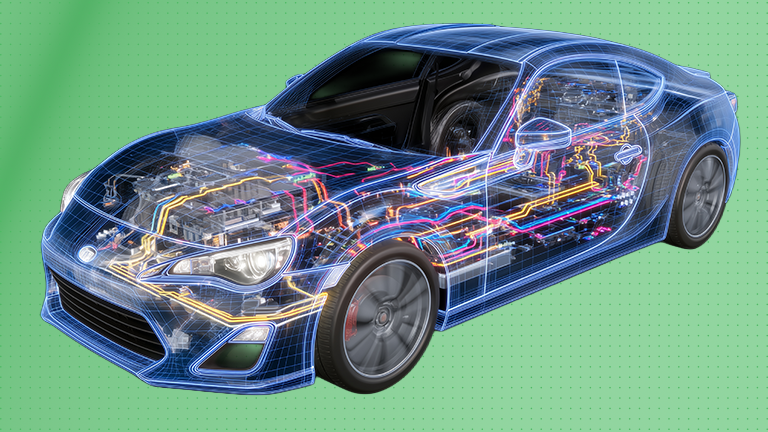
The industry is rethinking and redefining how power gets distributed in modern vehicles. There is a move away from old-school relays and melting fuses toward smart fuses that better support zonal architectures.
By switching to smart fuses, manufacturers cut down on wire harness weight, which means lighter cars and a direct bump in EV range, less charging and fewer emissions. Another thing to keep in mind is the real-time diagnostics and predictive maintenance these smart fuses bring to the table. It’s a leap in safety: not only do they prevent the classic “fuse blew, now what?” scenario, but they also keep drivers out of the loop for manual replacements.
Moving from a centralized body control module (BCM) to a zonal architecture makes the whole system more flexible and scalable. It’s easier for automakers to adapt to different models without re-engineering the wiring every time.
Through a business strategy lens, new smart fuses, pioneered by ST with its I2t programmable fuse devices, mean lower production costs, faster go-to-market and better alignment with sustainability goals. Smart fuse technology is a foundation for next-gen automotive platforms.
Let’s look at the prototyping side. ST has announced new evaluation boards: the STEVAL-PDUBV1 for primary (stage 1) system evaluation, and the AEK-POW-PDUMINI for satellite (stage 2) power distribution units. These come packaged with user manuals, GUIs, and are supported by AutoDevKit™ and SPC 5 Studio. These software kits require no license, so teams aren’t stuck waiting for IT approvals.
Taking a modular approach means development teams can mix and match microcontroller boards, rapidly prototyping without being locked into a single platform or board configuration. This flexibility makes it easier for teams to experiment and pivot if requirements change midstream.
The smart fuse features stand out, too. The I2t programmable curve lets engineers set precise current boundaries and trip times, protecting wire harnesses from overload. Reaction times are under 30 microseconds, which not only meets but exceeds regulatory demands for safety.
This software configurability lets OEMs use one design for multiple platforms. Plus, post-production changes, such as over-the-air updates, are also possible. That’s hugely significant for supporting new standards or unforeseen field issues.
Future-proofing zonal architectures
Now, stepping from prototyping into the real world. The newest parts to consider are shown in the table below.
| Device | STi²Fuse Family | On resistance (RDSON) | Current (nominal, programmable) | Switching time (nominal, programmable) | Current limit |
|---|---|---|---|---|---|
| VNF9D5SF | Monolithic High-Side Drivers (HSDs) | 2 x 5.9mΩ | 4A to 15A | 1s to 300s | 75 A |
| VNF9D10SF | Monolithic HSDs | 2 x 10mΩ | 2.5A to 10A | 1s to 300s | 67 A |
| VNF9Q20SF | Monolithic HSDs | 4 x 20mΩ | 1.5A to 6A | 1s to 300s | 34 A |
| VNF9D1M5Q | Hybrid HSDs | 2x 1.5mΩ | 8A to 27A | 1s to 300s | 120 A |
| VN9D1M2Q | Hybrid HSDs | 2x 1.2mΩ | 10A to 33.5A | 1s to 300s | 145 A |
| VNF9D3Q | Hybrid HSDs | 2x 3mΩ | 2A to 18A | 1s to 300s | 70 A |
The list of main features is substantial. There’s the built-in self-test, capacitive charging mode to manage inrush current, and digital diagnostics with ADC integration. That means safer startup for high-capacitance loads and clearer fault isolation. Functional safety gets a boost, too, with direct input pin, emergency stop and diagnostics pin latch for microcontroller fault interrupts.
Although both types of STi²Fuse devices offer enhanced functionality, Monolithic HSDs are tailored for low to moderate current scenarios, focusing on integrating multiple channels, programmable slope control, built in PWM engine, and providing accurate i²t protection suited for distributed automotive systems.
By comparison, Hybrid HSDs are designed for moderate to high current demands, featuring sturdy power stages, peak-current latch‑off, dedicated emergency stop circuits, and reverse-battery safeguarding to address safety‑critical operations and boost overall system reliability.
Using the ST L99SP08 alongside eFuse HSDs enables ultra‑low‑power Active Standby ON operation by supplying low‑current loads through integrated P‑channel FETs while keeping the main HSD off, significantly reducing system quiescent current in power distribution. The device intelligently performs a fast self‑wake‑up, automatically enabling the HSD when load current exceeds the P‑channel capability, ensuring seamless power delivery without software intervention. Highly accurate digital diagnostics and current sensing provide deep visibility into load behavior, improving system robustness and fault detection. As part of the STi²Fuse family, the L99SP08 strengthens functional safety and is ISO 26262 ASIL‑B ready, making it ideal for safety‑critical automotive power architectures.
What matters here is that these new generations address technical gaps and are designed to reduce risk for both OEMs and their supply chains. Teams can focus on meeting regulatory targets, while the new hardware delivers better safety and operational reliability.
Now that we’ve mapped out the feature upgrades, let’s get practical. Where do these smart fuses make a difference in the field?
Smart fuse applications
The devices are relevant for everything from traditional power distribution to advanced battery management setups. That means high-current loads, relay and fuse replacement, and even parallel switch scenarios.
Transitioning to zonal power architectures
Smart fuses enable automakers to move from the classic power distribution model toward a smart power distribution architecture (Source: STMicroelectronics)
Automakers and system integrators have flexibility, whether they’re working on legacy platforms or next-gen EVs. But real innovation doesn’t just stop at product launch. Customer support and clear communication keep adoption on track.
Seeing where these smart fuses fit in real-world systems, the next question is often about positioning against discrete solutions. Weighing integrated e-fuse devices against piecing together discrete parts is where Avnet’s technical experts can dive deeper into a customer’s application before advising.
Smart fuses aren’t just the next step in automotive power distribution, they’re the foundation for lighter, safer and more adaptable vehicle platforms. With ST’s latest I²t programmable devices, OEMs can speed development, cut complexity and futureproof their zonal architectures. To explore how these solutions fit your next design, connect with Avnet’s technical team and turn smart fuse innovation into real world performance.

