Designing the smart drone subsystems that matter most


The shift in the burgeoning drone market is unmistakable: engineering organizations are aligning around full stack subsystems, and customer engagement is increasingly driving the roadmap rather than following it. When we consider what drone customers need today, a handful of clear priorities surface:
- Vision AI is constrained by severe thermal and form factor limits. Everyone wants more inference, but not at the cost of heat or power draw.
- Real time responsiveness spans electronic speed control (ESC), motor control and flight management; latency budgets are unforgiving.
- “Always connected” is becoming “always secure and reliable.” Communications and security must be designed in, not bolted on.
- Platforms must scale across variants without rewriting everything; cost sensitivity is rising.
- Regulatory complexity is ratcheting up, so compliance-ready building blocks matter more than ever.
Five areas impacting drone development

What stands out most is the move toward highly coordinated engineering teams. Hundreds of specialists across the industry are focused on more than two dozen targeted applications. This creates the internal horsepower needed to architect systems end to end, not just deliver components. For OEMs, that translates into shorter time-to-market, clearer design paths and fewer integration bottlenecks.
Understanding the core subsystems
At the heart of every modern drone are three critical subsystems that increasingly define differentiation in the market:
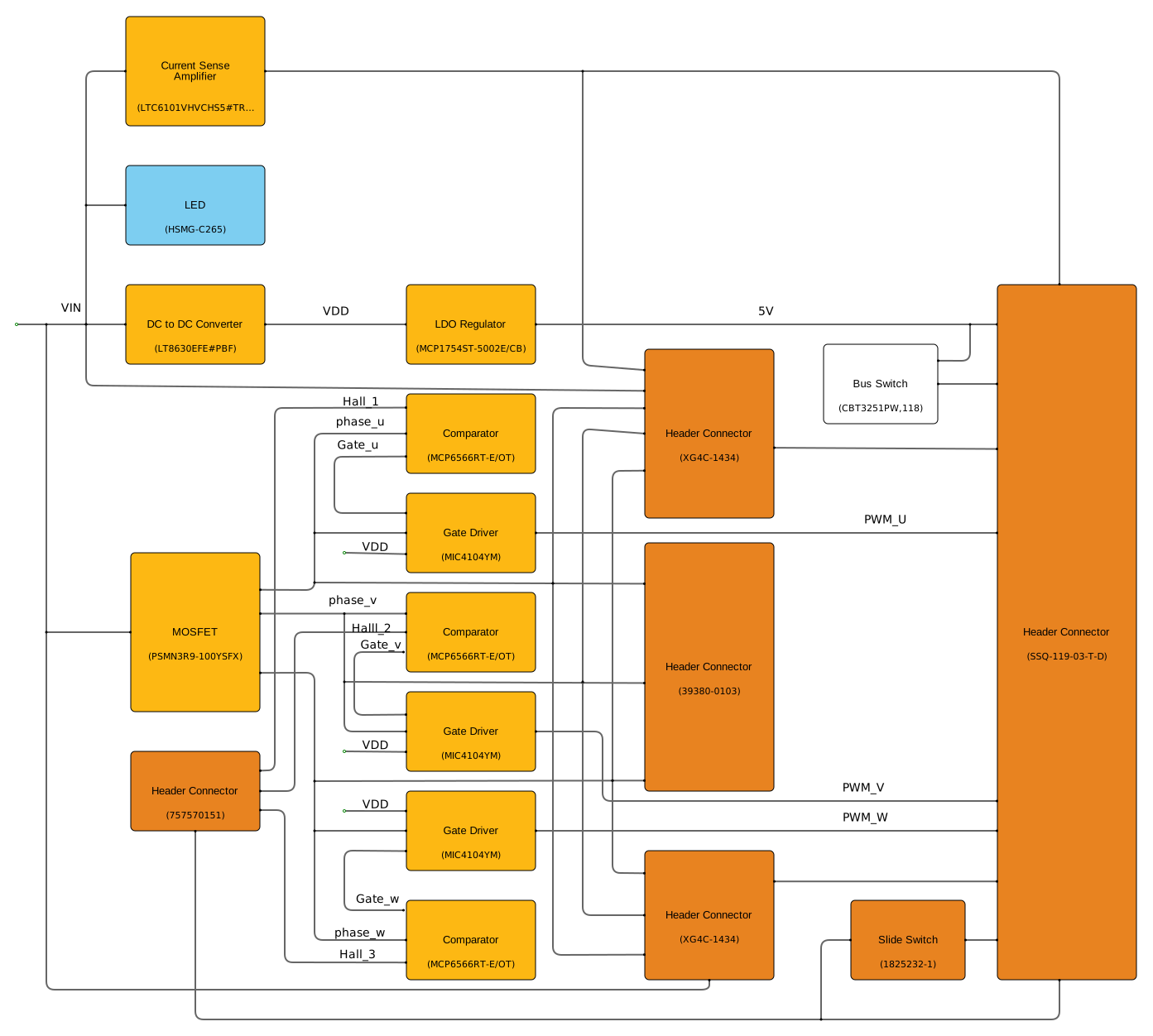
- Electronic speed control (ESC)
- Flight controller
- Gimbal / vision stabilization system
These three areas represent the majority of engineering complexity in next generation platforms. And they are also where the most meaningful innovation is occurring.
ESCs are evolving from motor drivers into safety critical intelligence hubs. The most forward leaning designs are embedding:
- AI driven anomaly detection to flag current spikes, thermal drift and pulse width modulation (PWM) irregularities before they cascade into flight critical failures.
- Telemetered health reporting to support uptime and compliance records.
- Higher power efficiency to reclaim thermal and energy budget for onboard AI.
Bottom line: ESCs now sit at the intersection of propulsion, predictive maintenance and airworthiness.
Expectations for the flight controller have shifted to flexibility, transparency and community validated software. That’s why the market momentum is behind:
- Open source stacks such as PX4 and ArduPilot, with rigorous hardware proofs and real time OS options (FreeRTOS, NuttX) to match customer preferences.
- Power and size optimized reference designs that consolidate previously scattered compute into fewer devices without sacrificing determinism.
With drones come vision systems. Camera stability in the air is critical to the efficacy of those systems. OEMs treat the gimbal as a strategic subsystem rather than an accessory. The most compelling direction marries precision motor control with on gimbal vision AI for stabilization, tracking, and robust imagery in high vibration/thermal stress scenarios, while pursuing lighter, more power efficient architectures that preserve flight time.
This fusion is decisive in inspection, surveillance, mapping and ag tech where usable imagery equals business value.
Reference designs aimed at speeding time-to-market

Development kits and speed to market
Momentum favors teams that put ready to use hardware and transparent software in the field early. Renesas is working with its partners like Avnet to deliver:
- Small form factor robotics/drone design kits with public design files and manuals to shorten time to first flight.
- Proof of concept and source code on GitHub so customers can test before committing and tailor quickly.
- Allocation planning and field enablement to get kits into field application engineers’ and customers’ hands this quarter, not next year.
The future is integrated, intelligent and open
The drone platforms of 2030 will be defined by how well teams develop and integrate the key functional parts: ESC, flight controller and gimbal. Bringing these into cohesive, highly optimized architectures is accelerating development. The market is moving toward:
- Intelligent power systems
- Modular flight controllers that are open source aligned
- Gimbals with AI enhanced sensing platforms
- Engineering organizations structured to deliver full stack solutions, from block diagram to reference design to field enablement.
The companies building with this level of integration and customer alignment are actively shaping the future of drone technology.
Learn more about Avnet’s Automotive and Transportation solutions.