
Beyond SiC: the quiet achievers in EVs
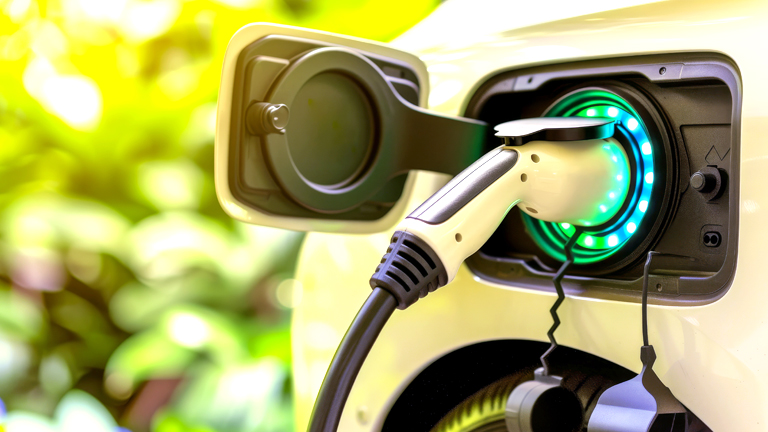
Riding the unstoppable wave of green travel, electric vehicles (EVs) are rapidly gaining popularity as an eco-friendly mode of transportation. However, for EVs to realize their full market potential, efficient and reliable charging infrastructure is crucial.
Silicon carbide (SiC) has successfully taken the spotlight as the “heart” of EV charging systems. Nonetheless, the implicit cooperation of numerous supporting parts is essential to ensure that this heart keeps beating. Passive components, such as high-performance inductors, capacitors, and connectors, work together as the “neural network” of EV charging systems, ensuring efficient and stable operation. The contributions of these quiet achievers are indispensable for the fast-charging capabilities of EVs.
SiC: The Superhero of EV Charging
SiC is a new type of semiconductor material with excellent properties such as high temperature resistance, high pressure resistance, and low loss. The new technologies and enhanced energy efficiency introduced by SiC devices have significantly advanced the EV sector by greatly improving charging efficiency, shortening charging times, and reducing the size and weight of chargers.
By integrating Infineon’s CoolSiC and CoolMOS technologies, Avnet’s SiC High Power Density 3.3 KW Bidirectional PFC Solution can achieve an efficient conversion rate of nearly 99.2% at 50% load. The bidirectional power flow also allows this design to be used in battery charging, energy storage, or battery formation applications, ensuring efficient storage and conversion of electrical energy. All these remarkable features have been enabled by SiC.
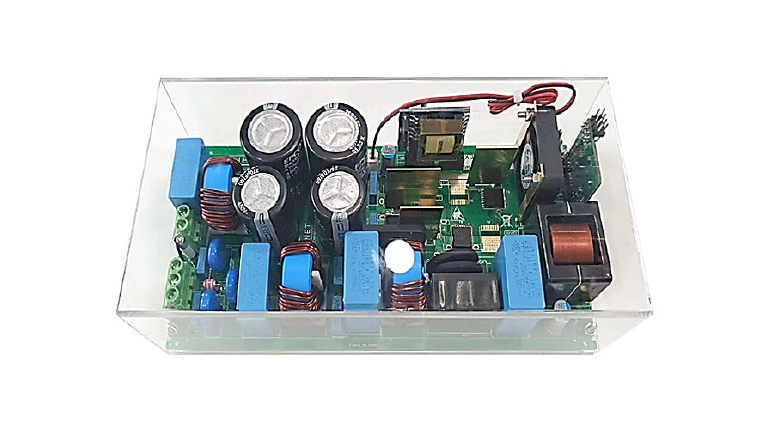
SiC High Power Density 3.3 KW Bidirectional PFC Solution
According to data from market research agency Yole Développement, the market demand for SiC power devices has experienced explosive growth, fueled by the robust development of the new-energy vehicle (NEV) industry. The global SiC device market scale is expected to exceed US$10 billion by 2029, with a compound annual growth rate (CAGR) of 25% from 2023 to 2029.
However, efficient and reliable charging systems for modern cars cannot be realized by relying solely on SiC devices. Passive components, such as inductors and capacitors, also play a vital role within charging systems.
EVs Shift into High Gear, Supercharged by MLCCs
The importance of passive components in EVs, especially multilayer ceramic capacitors (MLCCs), cannot be denied. As a key electronic component, MLCCs have a substantial impact on the operation of EVs, advanced driver assistance systems (ADAS), and in-vehicle connectivity technologies.
MLCCs are composed of alternating layers of metal and ceramic. Due to their compact size, high capacitance and superior reliability, they have become an indispensable part of EV electronic systems. An EV can contain as many as 10,000 to 15,000 MLCCs, which function as micro charging stations, continuously supplying the battery with the energy it needs.
Demand for MLCCs has been driven by the increasing popularity of EVs, ADAS and in-vehicle connectivity technologies, and compounded by the stricter emissions and fuel efficiency regulations that have recently impacted the automotive electronics sector.
According to the latest industry analysis from RationalStat, the global automotive MLCC market value is estimated to reach US$12.3 billion in 2023 and is expected to grow at a robust CAGR of over 6.0% during the forecast period from 2023 to 2030.
This forecast of dynamic growth has led many industry leaders to ramp up their investment in the automotive MLCC sector. Currently, the industry is focusing on developing MLCCs with larger capacities that can be mounted on EVs and withstand the high-power voltage transmitted from the battery, enabling ultra-fast charging and power transmission. Furthermore, as EVs require an increasing number of in-vehicle components, a large capacity is essential for the stable operation of semiconductors.
Hassle-Free Charging is Just Around the Corner
The new era of EV charging, ushered in by SiC devices, is underpinned by passive components such as MLCCs. The right passive components can significantly enhance the efficiency, reliability, and performance of charging systems. Meanwhile, EV charging systems will continue to evolve toward greater efficiency, intelligence and sustainability. With these advances, the application of SiC technologies and high-performance passive components will become more widespread.
Moving forward, Avnet will continue leveraging the latest technologies to develop more EV charging solutions that actively contribute to the promotion of green energy. In the near future, EVs should be able to “refuel” as easily and swiftly as fuel-powered vehicles, bringing greater efficiency and convenience to our sustainable lifestyles.
