
What does the future of automotive technology look like?

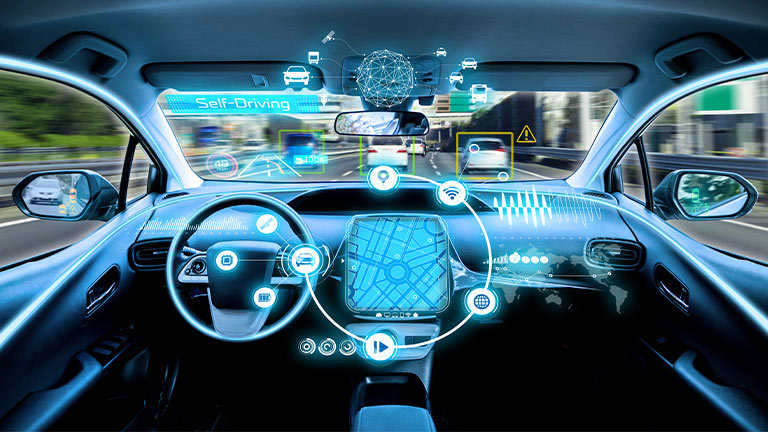
Molex sponsored a survey of more than 500 key industry players who were asked about the future of next-generation vehicle systems including ethernet, WiFi, storage, AI, analytics, safety, infotainment and autonomous operation.
Let’s start out with looking at the various advancements that are on the horizon.
In the next 5 years, stakeholders believe users will gain access to mobile app interfaces, streaming of movies and TV, added safety and driver assistance, over-the-air software updates, driver safety profiling, vehicle personalities and a subscription model for key features. While the next 5-10 years will likely bring virtual reality experiences, driver and passenger gaming and innovative passenger spaces.
Autonomy is one of the bigger topics, as it has a large impact in how we interact with our automobiles and is broken down into 5 levels:
Level 0 – No Driving Automation
While level 0 refers to no automation technology, driver support systems such as forward-collision warning, blind spot warning and lane departure warning may temporarily intervene.
Level I – Driver Assistance
At least one driver support system that provides steering or braking and acceleration assistance. Adaptive cruise control is a common example. The driver is responsible and must be prepared to take control at any time.
Level II – Partial Driving Automation
Vehicles with ADAS that can take over acceleration, braking and steering in some scenarios. These generally require the driver to have their hands on the steering wheel.
Level III – Conditional Driving Automation
This level using driver assistance systems and artificial intelligence to make decisions. Humans must be present but can engage in other activities as they do not need to supervise the systems.
Level IV – High Driving Automation
No human is required at this level because it is designed to stop itself in the event of a failure. This level is used in driverless taxis and public transportation and is restricted geographically to travel between 2 points.
Level V – Full Driving Automation
This is the highest level of automation and means a vehicle can drive itself with no geofencing or human interaction. The only human involvement is in setting the destination.
The findings show 44% of experts expect significant technical advancement will drive Level IV autonomy to become a standard feature in the next 5-10 years, and Level V to follow a bit behind. Of course, these advancements will require even more technology, with out-of-car connectivity having the biggest impact. And that connectivity will rely on the face that the software ecosystem must keep up.
Obstacles and Challenges
There are obstacles and challenges with any advancement, and the automotive market is no different. When automobiles are connected to the cloud or a wireless point, there’s potential for that connection to be compromised making security the biggest concern. For this reason, 98% of the respondents indicated that cybersecurity was at the top of the list.
Beyond security, consumer fear of autonomous driving is the most prominent issue for the industry to overcome closely followed by insufficient investment in the infrastructure outside the vehicle. These issues go hand-in-hand as consumers are wary of new technology especially where the infrastructure hasn’t been developed yet giving consumers a sense of security.
No discussion of obstacles and challenges would be complete without mentioning the supply chain. Equally weighted with technology is the issue of the supply chain. Just about every aspect of our lives has been affected by this issue, but it comes down to engineers and purchasing departments to ensure products are available, and second sources are lined up to ensure a robust pipeline.
Conclusion
From increasing levels of autonomy to safety and infotainment, it’s clear that engineers are continuously looking toward the horizon and improving the automotive experience. It’s also apparent that those same teams are aware of the potential pitfalls and are working at navigating them. The overall results from the industry experts in this survey reveals an exciting outlook for the technology and advancements to come.
To find out more about Molex automotive connectors, contact your local Avnet representative.